

Every day, I see a living – running, jumping, playing, eating – fur ball made with the mystery of stardust, in my backyard. Every time I see it, it makes me stop in my tracks and elicits this yet-to-be-answered question from me – “What/Who even are you?”
According to what education has taught, it is an “Eastern Grey Squirrel”. But then, it’s just a label, given by us – who think, that we can measure and know animals, because, well, their forms are “below”, ours. That too, decided by us.
Even Darwin, who shifted our comprehension of the wild world by explaining the evolution of life, had jotted down in the side space of a natural history book, this:
Never say higher or lower. Say more complicated.
What do we know, about these creatures – sometimes wiser, and more complete than us – that still roam around, still surviving the suffocation of our superficial ways? Perhaps the most important thing to know is this – we are fortunate beyond our imagination and comprehension – to share the splendor and hardships of this pale blue dot floating in a fathomless universe, with them. We would be so meaningless and alone without them – IF AT ALL, we could even manage to survive in the first place – without them.
And yet, due to our regrettable sense of superiority, and misplaced sense of mastery, we are fast forgetting, and losing – the bordering-magic ecosystems of the natural world and their extraordinary inhabitants.
Fortunately, however, not everyone has forgotten.
I feel lucky to know this wise and sensitive man from Australia – with a crystal clear vision and an awe-inspiring determination to save the endangered species.
Endangered wildlife poet & conservation activist Anthony E. Lovell found a connection with wildlife when he was just a young child. He was so fascinated with the world of wild animals, he wanted to become a zoologist.
He couldn’t. But he ended up doing something better. He cross-pollinated – that aspiring zoologist’s curious mind and the heart of a poet – together, and set out to save the wildlife going fast in the direction of extinction.

Our productivity-oriented culture makes us take pride in being called “rational”. But as humans, our intelligence may not be our biggest strength…perhaps, it’s our capability for emotions – feeling them, expressing them, and most importantly, acting upon them.
Anthony Lovell banked upon this strength of humans when he started his labor of love for the endangered species, his wildlife poetry website – The One Million Poetry – to change the way we approach the very urgent cause of saving endangered species from extinction. In his own words, he “makes people cry while their tears still have potency.”
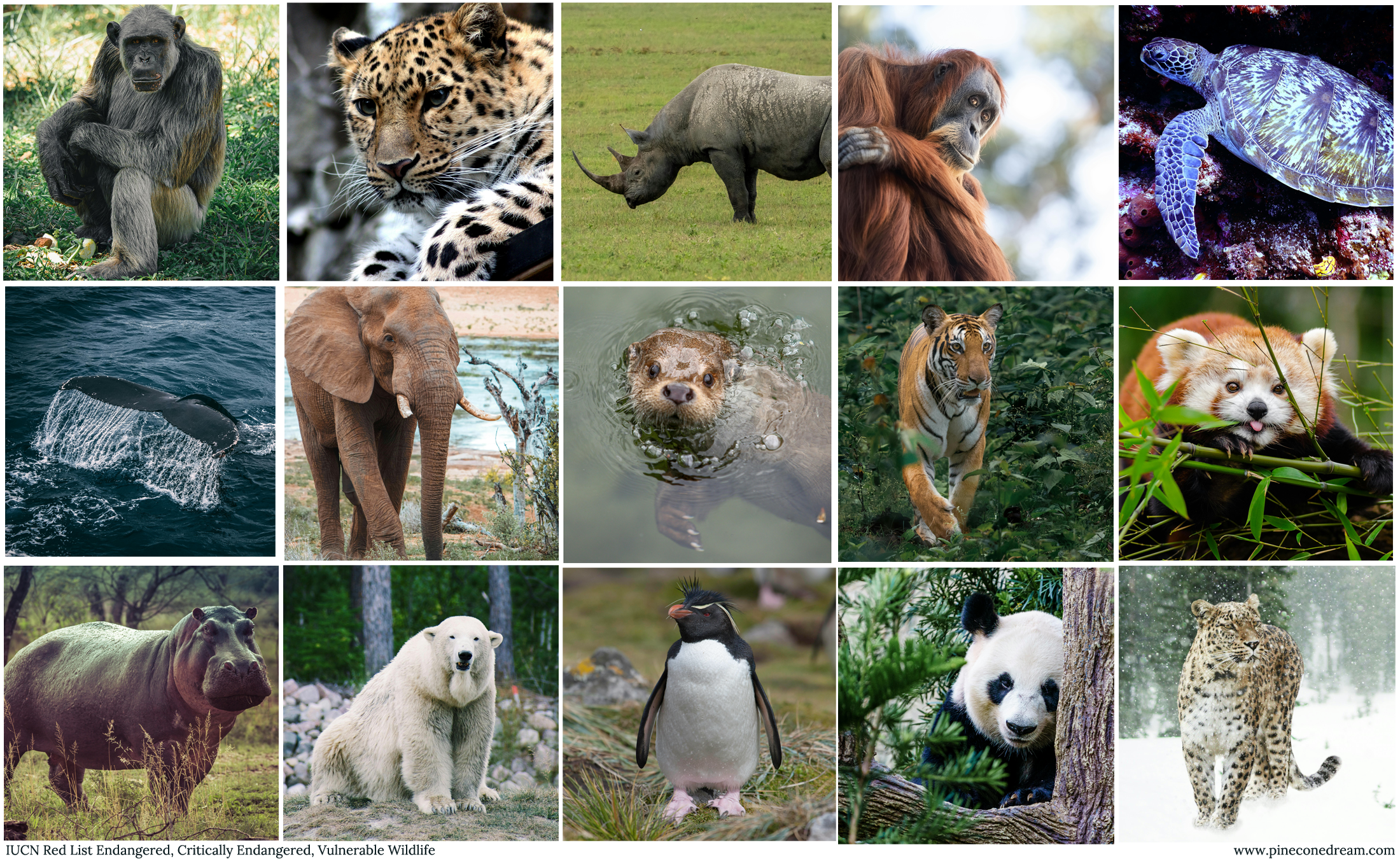
He founded The One Million Poetry in collaboration with Ingrid Lung of The Earth Agency inspired by the 2019 report of IPBES, which stated that up to 1 Million species were at risk of extinction due to human activities that neglects them.
This simple, adorable, and impactful 1988 video clip from RSPCA Australia, which was stuck in his mind for decades, took the form of a super special logo for The One Million Poetry.

Through his poetic works, Anthony Lovell collaborates with conservation organizations and other creative people to support and promote a world view which he calls the “Sanctuary Earth.”
One of his missions for this year is to get cetaceans recognized as sentient species, for which he has included my poem – “A Poet At A Dolphin Show” as a guest poem on The One Million Poetry. On this occasion, I grabbed a chance to talk to him about his poetry works and wildlife conservation. Below are his insightful answers to some questions I asked him.
Gyaneshwari: You are amazingly prolific in your endangered species poetry, the sense of urgency in your poems is not just hard-hitting, it is infectious. As you have expressed elsewhere, what keeps you going is your undying love for wildlife that started from a very young age.
In retrospect, was there any particular incident when as a child you felt a connection with wildlife for the very first time, something that stayed with you forever?
Anthony Lovell: I think it’s fair to say that my love of wildlife was inherited from, and modeled, by my mother. However much it is frowned on nowadays, my mother used to feed the possums just outside the kitchen window (and birds during the day – I remember Kookaburras stealing meat off the kitchen bench when meals were being prepared). Someone found an orphaned possum Joey, still without any hair and with little prospect of survival, and she cared for it and raised it, feeding it with an eye-dropper every couple of hours during the early touch-and-go survival period.
Although I don’t agree with handling or keeping Wildlife anymore, my childhood was filled with reptiles, birds, and fish. The first great trauma in my life was when a ‘pet’ Blue-Tongued Skink died when I was in primary school, and my mother tried to console me by saying we killed it with kindness, though with hindsight it was clearly an unnatural diet. In other words, no one thing stayed with me, it was in the family culture, for which I am eternally grateful.

Gyaneshwari: I enjoy sharp-witted lines in your poems that you weave with well-researched, objective, scientific, historical facts and figures about wildlife. What according to you is the most challenging part in the process of writing an impactful poem about an endangered species?
Anthony Lovell: I’m lucky – because of my upbringing, watching nature documentaries, and reading books about wildlife – to have at least a rudimentary knowledge of most species I write about. I usually start to write the poem without referring to current facts and like to see where the poem wants to go in terms of imagery, plot, pattern, and storytelling. I prefer to go with creativity rather than construction (though sometimes that challenge is character-building!).
When I have that framework, I research the animal to see what I have left out or didn’t know. My aim is always for the reader to get to know the animal and its distinctive features and behavior, in the context of why it is endangered or critically endangered, which is where I need to spend most of my time.
My biggest challenge is knowing when to stop! Most of my poems tend to be too long – I find it hard to be succinct. Thankfully I have someone long-suffering and amenable doing the graphics and layout on the website (thanks Ingrid).
Gyaneshwari: In your poems I often see you addressing an endangered species directly, saying things to them, and warning them of dangers. What do you think they would respond to you if they could? 🙂
Anthony Lovell: I began by anthropomorphizing the animals to give them a voice, and sometimes I still use that device because I want them to speak for themselves and indirectly to the reader. It’s presumptuous of course.
My favorite one is where there is a dialogue between the polar bear and the poet (‘man’) about being made the ‘Little Finger’ in the ‘Fiveshooter’ Series. I think I hear the animals saying ‘Love me to save me, and if you love me leave me be. Let me be free.’

Gyaneshwari: Who are your favorite wildlife/nature poets and writers?
Anthony Lovell: I don’t read a lot of poetry lest I be unduly influenced or feel inadequate. Wildlife/Nature poets seem to be few and far between, so when I find one, I like to make contact…and perhaps ask them to be guest poet on The One Million Poetry website, as you know, Gyaneshwari.
Gyaneshwari: With its metaphors and imagery, poetry is meant to deepen one’s understanding, enhance consciousness, and elicit raw emotions. Personally, this is why I enjoy reading poetry and crafting it, because, it slows a reader’s time, nudging them to reflect.
However, be it the ever-diminishing attention span of today’s humans, or the constant need for instant gratification, I have felt, that it is a bit of a challenge for a poem to grab the attention of an average reader. What will you advise today’s wildlife/nature poets so that they can overcome this challenge and their poetry can inspire action?
Anthony Lovell: Diminishing attention span and compassion/cause fatigue are indeed big challenges. I write first and foremost for myself – it is a compulsion, driven by a cause. I have to write to get the thoughts out of my head and feel, that I am doing something that might make a difference to a few people.
Apart from that, exercising creativity is exercising a power and can make you feel more human because humans crave meaning. Too often we make up meaning, whereas creativity expresses meaning, even if personal, just for the poet/painter/sculptor. The medium captures the meaning, even if completely subjective. If I didn’t have my creative outlet I would be alive but not living. My generalizations here are completely subjective!
Gyaneshwari: You make it a point to follow wildlife awareness days for creating poems, and there are so many new days every year.
What kind of positive change, and hope, do you see in recent times in terms of awareness about wildlife conservation among people & organizations, especially in the context of corporates/businesses?
Anthony Lovell: The only hope is for corporations, governments and people to abandon Business As Usual (the reason I wrote ‘BAU Kills’) for a system that recognizes that wildlife and biodiversity created the life support system of this planet, and then conduct themselves in a way that does not keep destroying that life support system.
Whatever that system is (my vote would be for ‘Business As Intended’ for ‘Continuity’, as opposed to ‘Sustainability’) it must happen faster! Ecological systems are worth modeling. Our current human systems are leading to self-destruction – not consistent with Homo sapiens, and not compatible with the continuity of life on Earth.
There are wonderful organizations on the front line of species conservation, worthy of resources commensurate with their importance. Some are becoming ‘B Corp’ certified and leading the way, as well as other certifications for nature-positive businesses. I try to tell their stories too. However, without global systemic and systematic change: ‘Houston, YOU have a problem…’ (from a poem I wrote 18 months ago but haven’t yet published). Thanks for the reminder.

Gyaneshwari: While we certainly can hope for deeper awareness about the urgent need for biodiversity conservation in coming years, what according to you, are one or two simple yet effective things we can do in our day-to-day lives that will make sure that we are letting the wildlife live?
Anthony Lovell: There are dedicated people out there who may be better at answering this question. I was wondering how to transition from ‘activist’ as some have called me, to ‘campaigner’. First, you have to come up with a campaign worth supporting. Just mulling over, these are some points I jotted down for a rough draft, with a vague concept in mind, earlier today:
Gyaneshwari: Not everyone is a poacher, animal abuser or someone exploiting wildlife for selfish reasons. Most people are sensitive to animals in general. Thankfully.
And yet, wildlife is seldom the most favorite topic of conversation –out of concern, or out of fondness – around general social gatherings or casual dinners. Why do you think generally, people don’t feel a connection with the natural world or the need to explore it?
Anthony Lovell: In some ways, I think it dates back to when hunting and gathering gave way to agriculture and permanent settlements. The animal part of the equation turned into commodification, and with the different waves of knowledge, exploration, and conquests, humans lost the sense of belonging to Nature.
Most of the systems that developed saw humans as the center of the universe and superior to animals – not animals themselves at all. I think that was the major wrong turn that paved a dead-end road we are still going down. In some places, education is perhaps catching up and the science is in: we are just another species of mammal, however, supercharged intellectually by evolution and then culture.
Brain Science is telling us now that an antidote to the treadmill of civilization and its pernicious effects on our mental health is to spend some time in nature! The effect is measurable. It’s nothing new, it’s a return to the origin. Periodically I have to get out for a walk in nature, in a forest along a natural stretch of coastline: and when I see the wildlife doing their thing, I feel tangible joy and happiness. I wish others could too, then they might be compelled to take up the cause and share the load.

Gyaneshwari: Your work is an inspiring example of how wonderfully capable art can be when put in use to awaken people.
Would you like to share any heartfelt incident where your poem(s) changed someone’s heart and they changed something for the better, big or small, outside or within themselves?
Anthony Lovell: I am happiest and most satisfied when someone takes the main messages on board and it inspires them to find, use or develop, and take up their own creativity in response.
At the moment, by request, I am commenting on a poem by a person who is advocating for the Mental Well-being of Rangers in Africa. Last year I wrote a poem for him to mark Rangers Day. This year he is the poet! We connected on LinkedIn and something good is coming out of it.

Gyaneshwari: When will we get to read a book by you? 🙂
Anthony Lovell: I am not an interesting or readable writer of prose, so it would have to be a (big) book of poems, for which I doubt there would be much of a market. I do have an idea in mind but it may just be a book I put on my own coffee table: ‘366 AD’😊
Complement this with Mr.Lovell’s heart-touching poems on his website, dear reader. A good point to start with is his favorite – “The One Million.”



Leave a Reply