

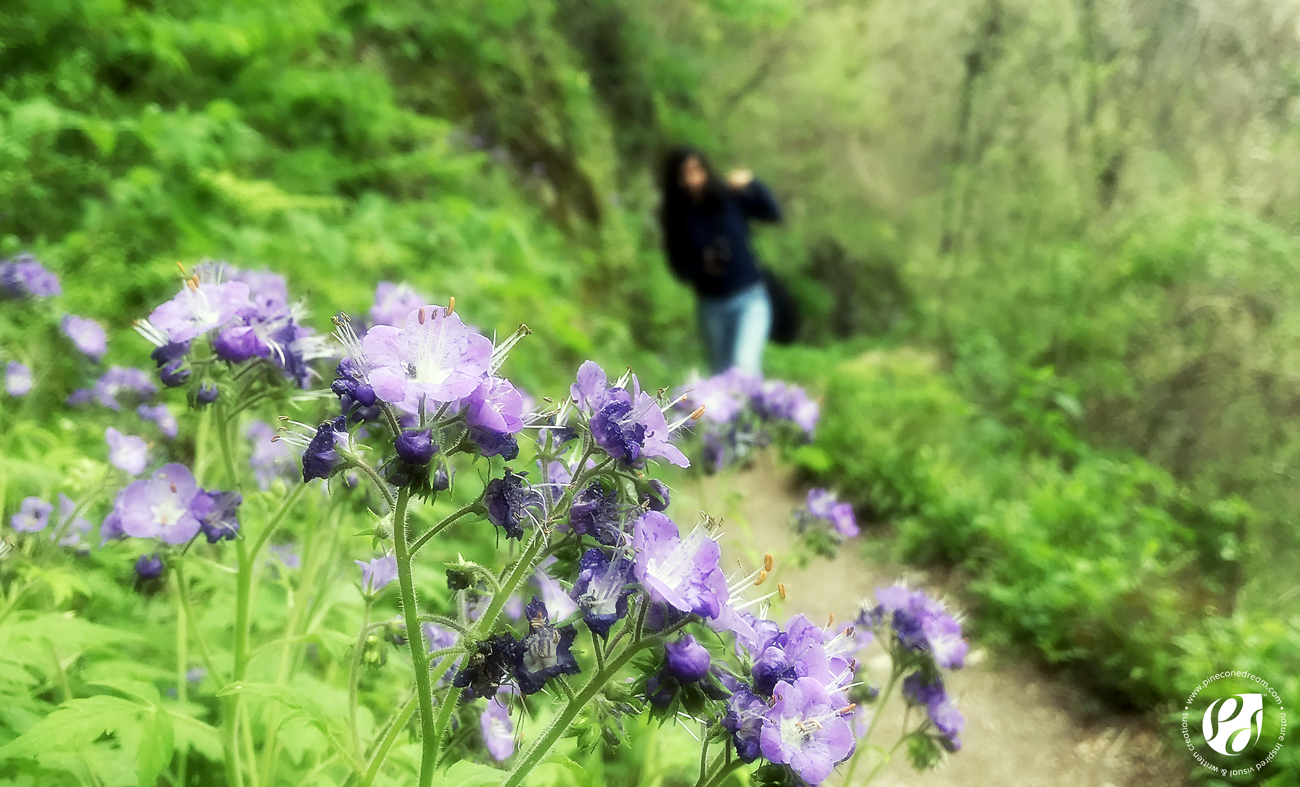
Pampered by none other than Nature herself, they are proud, proud beings! 🙂
They live in the tough terrains of mountains, in some unknown, unvisited trails of the forests. And when you somehow manage to reach them, you find these beauties dancing in the wind with their own mysterious joy, totally oblivious of the attention they are getting.

Oh yes. I have so often seen that look of pride on those pristine faces. Wildflowers!
Despite this acting pricey, I love them. Perpetually.
With over 1400 species of wildflowers, more than in any other North American national park, the Great Smoky Mountains National park is world renowned for its variety of wildflowers.
For a wildflowers crazy person like me, when I am at Smokies in the spring – well, what can I say, it’s a “kid in a candy store” case.
If you relate to this fascination and would like to visit the Smoky Mountains National Park to see the incredible wildflowers there, read on, because here I have shared the list and trivia about 32 odd species of wildflowers I spotted at the Smokies in spring, around Mid-April.
But if you are simply curious about my epiphany, you can scroll down all the way to the end!
Now, I was there at the Smoky Mountains National Park just for the wildflowers this time. And so, I made sure to grab this very useful Wildflowers trails map (available at visitor centers) and this cutest book on wildflowers out there, with me – for identifying them.
For your reference, I found all these 32 species in one of the following trails:

Oconaluftee River Trail, Porters Creek Trail, Little River Trail & Chestnut Top Trial


1. Crested Dwarf Iris
I spotted these complex looking flowers quietly blossoming by the side of the creek at the Porters Creek Trail. They are generally found in rich, moist open woods and trail-sides.
Do you know, each yellow crest on the blue-purple sepals leads pollinating insects toward the nectar hidden deep in the flower?
2. Flowering Dogwood
Well, first things first! This beautiful flowers have been named Wildflower of the year 2018 by the Virginia Native Plant Society!
Flowering Dogwood is not a plant, instead it’s a tree of a medium height, and boy, they have blossomed so generously throughout the woodlands of Smokies!
3. Foam Flower
They are found mostly in moist woodlands and stream banks, I found it at the Porters Creek Trail. The delicate spikes of this Spring wildflower rest on a totally leafless stalk, and its leaves resemble the Maple leaves.


4. Blue Phlox
These were the wildflowers I spotted the most. They were present practically in almost every trail I visited inside rich woods. The plants are tall with a dazzling display of blue to purple flowers. The five notched petals radiate from a very narrow tube.
When tightly wrapped in a bud, they form the shape like a torch. “Phlox” is Greek for flame! 🙂
5. Mountain Krigia
These rare flowers can be confused for Dandelions. The ray flowers have fringed tips. Most of its leaves are basal, though there may be a few on the flowering stem. Its habitat is mostly crevices of moist cliffs, grassy balds and specially, Mt. Le Conte.
6. Bulbous Buttercup
These flowers have cup-shaped flowers made of 5 petals. Flowers are usually bright yellow colored, with shiny petals. This is because of the special layer of reflective cells located beneath the superficial cells of the petals! Several species of buttercups have orange, red or white flowers too.
And you know what…all parts of a buttercup are poisonous for cattle and humans!


7. Heal All
As the name implies, Heal-all was used medicinally. It was thought to be particularly effective for diseases of the mouth. These plants are low-growing, sprawling ones and can be found at woodland edges, trail sides and stream-sides.
I found them aplenty at the cutest – Chestnut Top Trail.
8. Rue Anemone
Now with this one, I found the leaves so much interesting and fun shaped! In ancient times, Persians considered Anemone species so poisonous it could foul the air, and so they often held their breath when passing this plant! You can find these wildflowers in the rich woods around the Newfound gap road and Bradley fork trail.
9. Showy Orchis
Nope, there is no spelling mistake here! They are type of an Orchid, and known as “Showy Orchis”, and as expected, as “Showy Orchid” too.
You saw the picture above, right? Do I even need to say that these are one of the prettiest wildflowers of Smokies? I found this gorgeousness at the Porters Creek Trail.


10. Yellow Trillium
This kind of Trillium have a single, yellow flower sitting atop these three huge leaves. Every time I looked at them I thought of a pretty girl wearing a flowy, oversized skirt! 🙂
The flower has petals narrow and erect, giving it the look of being a “closed” bud. I saw hundreds of these in the park and kept thinking that they are yet to “open/bloom” only to realize later in the day (after researching in the book) that they are like that only! All Trillium are characterized by having their parts in three of multiples thereof. Three leaves, three petals, three sepals, three stigmas, six stamens etc. So cool… isn’t it? 🙂
I found them mostly in the Little River Trail.
11. Thyme Leaved Bluets
These tiny flowers are one of the cutest wildflowers I have come across till date. Four blue petals surround a yellow spot in center. They grow in dozens in patches and make for a very pleasing mosaic. Not just for us humans to see but also for pollinators like bees, butterflies etc.
I have spotted them in plenty, at the Clingmans Dome in Summer as well.
12. Pink Trillium
According to folklore, trillium is a symbol for modest beauty…When White Trillium age, they become pink!
All the botanical characteristics mentioned in the Yellow Trillium (No.11 above) also apply to the white/pink ones too. Did you know, Trillium are pollinated by Ants? And they are the favorite food of the white tailed deer?


13. Umbrella Leaf
These wildflowers get their name from their leaves – they look like an open umbrella left standing. The plant’s small cluster of white, six-petaled flowers rise on a stalk so above the leaves that you get confused, really! 🙂
I saw them at the Chestnut Top Trail.
14. Beaked Violet
This flower’s lower petal has a delicate upward curving protrusion, which makes it look like a beak! Only the lower three petals have dark blue/violet lines that work as nectar guides.
These unique Violets can be found in moist, rich woods and often near Eastern Hemlock trees.
15. Wild Geranium
The bright purplish pink blossoms of this plant can be identified from a distance. When you look closely, the five petals have fine lines leading towards the nectar. In the 1700s a botanist first theorized that bees use these lines to find a flower’s nectar.
I found these beauties at the Porters Creek Trail.



Leave a Reply